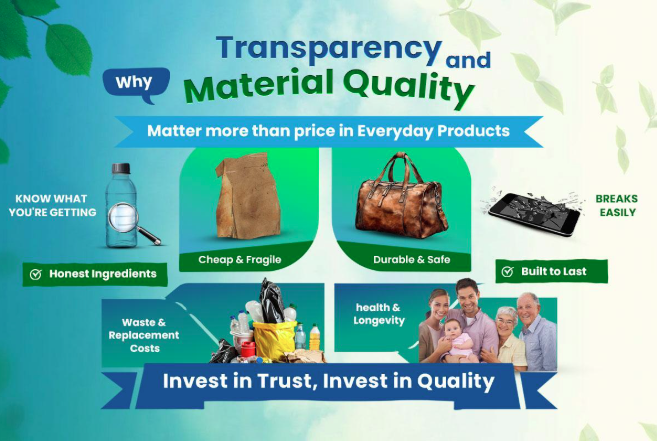
The majority of people begin their shopping journey by looking up price. It’s logical, why to pay more for a product if it doesn’t look similar? But, as time goes by consumers realize that price alone seldom is the only factor that can tell the whole story. The true difference usually appears weeks or even months later, as materials start to wear out, performance decreases or the appearance of the product changes.
The quality of the material and its transparency have a significant impact on the durability of products everyday usage. If materials fail, transparency can reveal the issue quickly. The appearance of brittleness, discoloration or cloudiness do not just impact appearance; they can also impact trust and value.
Understanding the importance of material quality aids consumers in making better decisions across a variety of categories including packaging and containers to the tools used each and every day.
How Transparency Reveals True Product Quality
Transparent products do not allow to hide imperfections. If manufacturers make use of premium materials, transparency increases the appeal by displaying the purity, clarity and uniformity. When they are cutting corners and use transparency, it can hurt their efforts.
The transparent materials show:
- Coloration due to the oxidation process
- Structural weaknesses
- Uneven textures
- Poor quality finish
People often think of transparency as transparency, but trust can only be maintained as long as the product keeps the original look. If a product that is transparent gets yellowed or degrades, the item instantly feels worn out or unclean, even in the event that it is still functional.
Why Discoloration Happens in Clear Materials
It is not a random event. It’s caused by chemical reactions that occur over time. Certain environmental factors can accelerate the process:
1. Heat Exposure
The repeated exposure to heat damages plastics of low quality and speeds up the process of oxidation. Every day activities, like charging devices or exposure to hot surfaces, or even being left in a vehicle–create enough heat to cause degradation.
2. UV Light
The sun’s ultraviolet rays degrade molecular bonds in weak materials. In the absence of UV stabilizers the clear materials eventually turn cloudy or yellow.
3. Oxidation
Air exposure causes reactions with the unstable substances in materials, altering their appearance and texture.
4. Poor Material Composition
Plastic blends of low-quality do not contain protection additives to cut costs. These materials degrade faster, even under normal use.
The best materials resist these elements through design, not just through random chance.
Why Material Quality Determines Long-Term Value
The real cost of a product reveals its true cost over time. Products made of poor quality materials might be less expensive in the beginning, yet they will require regular replacement. This leads to greater overall expenditure and unneeded consumption.
Materials of high-quality are available:
- Longer usable life
- Stable appearance
- Improved structural performance
- Consistent user experience
If consumers are evaluating items beyond the price point and quality, they begin to focus on security, durability and behavior when they are under pressure. This leads to better purchasing decisions across all the categories.
Everyday Accessories as a Real-World Example
One of the best instances of the differences in quality is the transparent cases for phones. Clear cases are popular since they retain the original style of smartphones. But, many users have the same issue, which is that they start to yellow after a couple of months.
The change is a source of frustration for users since it occurs despite meticulous use. The root of the problem lies with the quality of the material. TPU that is of low quality reacts rapidly with oxygen, heat and sunlight. High-quality TPU blends resist these reactions, and they maintain the flexibility and clarity longer.
Because of this, informed buyers now actively look for anti yellowing cases when choosing covers for commonly used devices such as the Oppo F31 5G.
This shift is similar to how consumers choose other transparent products, valuing longer-term performance over appearance.
Why Cheap Alternatives Rarely Save Money
The cheapest products can appear to be wise options until they fall short early. When it comes to transparent materials, deterioration affects both aesthetics and function.
Common outcomes are:
- Regular replacements
- A decrease in grip or flexibility
- The loss of visual appeal
- A lower level of protection capability
Replacing a product several times can be more costly than investing one time in higher quality. Customers who look at specifications for the material instead of price tags usually will be happier in the end.
How Manufacturing Priorities Have Evolved
Manufacturers react quickly to the changing needs of consumers. As consumers gain more knowledge they place more importance on durability and the science behind materials.
Modern production is now focused on:
- Advanced polymer blends
- UV-resistant ingredients
- Compositions with heat-stable properties
- Testing for longevity
Brands like CoversGen are a reflection of this shift by focusing on durability and clarity rather than trends in design that are disposable. This shift is in line with the rising consumer demand for products that are durable in time.
What to Look for When Choosing Transparent Products
Customers can stay away from disappointment by looking at the following essential signs prior to buying any item with a transparent label:
- Description of the material: Look for detailed specifications instead of vague claims.
- Resistance is a feature that includes: Anti-yellowing, UV resistance or heat stability.
- Flexible: High-quality materials stay flexible, instead of becoming hard.
- Quality of finish: Smooth edges and uniform clarity signify higher quality manufacturing.
- Brand Transparency: Honest descriptions often indicate dependable products.
These elements help buyers assess the value of their investment over immediate appeal.
Why Aesthetics and Performance Are Connected
The appearance of a product often indicates its performance. If a material is degraded visually they typically become weaker structurally. It is common for yellowing to occur with hardening cracking, or a decrease in impact resistance.
Products that aim to keep clarity typically provide higher performance in general. They can withstand stress, preserve flexibility, and also protect more efficiently.
This is why seasoned buyers tend to look at products more by their overall quality, not just price or design by itself.
Final Thoughts
The quality of the material determines the way products wear out, perform, and maintain value. Transparency amplifies this fact by exposing flaws in the beginning or enhancing the trust of customers as time passes.
Selecting products that are designed to withstand coloration, structural fatigue and environmental stresses will provide greater satisfaction and fewer replacements. While consumers will continue to evaluate prices beyond the surface durability and quality remain important considerations for all purchases.