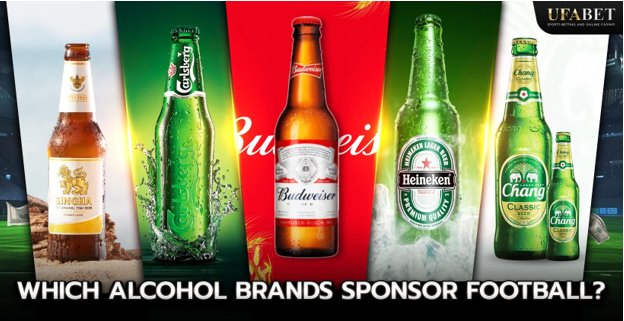
The intersection of alcohol brands and professional football represents a lucrative commercial nexus. Global breweries invest billions to secure visibility within the world’s popular sport. The industry utilizes the emotional intensity of matches to forge a connection between consumption and celebration. However, an inherent irony exists in the partnership. Football athletes represent the pinnacle of physical fitness, health, and discipline, while alcohol consumption links to health risks and performance decline. Brands bridge the gap by focusing on the “fan experience” instead of the athletic performance. The marketing strategies posit beer not as a fuel for the players, but as a reward for the spectators. The narrative suggests that watching football requires a beverage in hand to complete the social ritual. The psychological association drives sales and cements brand loyalty among the massive global audience.
1. Budweiser
Budweiser, an American-style pale lager produced by Anheuser-Busch InBev, holds a dominant position in the global market. Often referred to as the “King of Beers,” the brand commands immense recognition. The visual identity features the iconic red bowtie and script font. Budweiser positions itself as a universal beverage, appealing to a broad demographic across multiple continents.
Budweiser maintains a high-profile presence in elite football. The brand serves as the official beer of the FIFA World Cup, a partnership spanning several decades. The exclusivity allows Budweiser to dominate the advertising space during the tournament. Additionally, the brand sponsors the Premier League and the National Women’s Soccer League. High-profile endorsements with individual stars, such as Lionel Messi, further elevate the profile of the lager.
The advertising strategy revolves around the “Man of the Match” award. Budweiser sponsors the trophy given to the standout player after every game. The tactic ensures the logo appears on screen during the post-match interview, a moment of high viewer retention. The campaigns often emphasize “greatness” and the journey to the top, aligning the ambition of the players with the consumption of the product. During the World Cup, the brand executes massive experiential marketing campaigns, setting up fan zones and viewing parties in major cities. The focus remains on shared euphoria and the collective experience of witnessing history.
2. Heineken
Heineken stands as a Dutch brewing powerhouse with a distinctive green bottle and red star logo. The premium lager enjoys availability in almost every country. The brand cultivates an image of cosmopolitan sophistication and wit. Heineken markets the product as a choice for the worldly, modern consumer.
Heineken is synonymous with the UEFA Champions League. The partnership ranks among the recognized sponsorships in sports history. The brand also sponsors the UEFA Europa League and various national associations. The involvement extends to Major League Soccer (MLS) in the United States, targeting the growing American soccer fanbase.
Heineken utilizes a cinematic approach to advertising. The “Open Your World” campaigns feature high production values and storytelling. The commercials often depict fans going to extraordinary lengths to watch the match, reinforcing the dedication of the supporter. A key strategy involves the “Heineken Star of the Match” promotion. Furthermore, the company aggressively markets “Heineken 0.0,” the non-alcoholic variant. Promoting the zero-alcohol version allows the brand to bypass strict advertising regulations in certain territories while keeping the logo visible. The strategy associates the brand with the premium nature of European nights, using the Champions League anthem to trigger an immediate brand recall.
3. Carlsberg
Carlsberg, a Danish multinational brewer, boasts a rich heritage dating back to 1847. The brand emphasizes tradition, quality, and Danish coolness. The tagline regarding “probably” the premier beer in the world remains a staple of advertising history. Carlsberg focuses on a balance between heritage and modern appeal.
Carlsberg holds a historic bond with Liverpool Football Club. The partnership lasted for decades, with the name appearing on the front of the red shirt during iconic moments, including the 2005 Champions League final. Although the shirt sponsor ended, Carlsberg remains a partner of the club. The brand also possesses a long history with the UEFA European Championship (The Euros) and supports the Danish national team.
The strategy relies heavily on loyalty and nostalgia. The association with Liverpool FC for a long duration embedded the brand into the identity of the club. Fans associate the logo with the glory years. Recent campaigns focus on the concept of “fandom.” Commercials depict the dedication of supporters, positioning a Carlsberg beer as the deserved treat after the emotional rollercoaster of a match. The brand also utilizes “Alibi Marketing” in countries with bans, using the font and style of the logo without the word “Carlsberg” to maintain presence.
4. Chang
Chang Beer, produced by ThaiBev, serves as a symbol of Thai national pride. The green bottle features an image of two elephants facing one another. The lager pairs well with spicy cuisine and hot climates. The brand commands a significant market share in Southeast Asia and seeks to expand globally.
Chang is famously associated with Everton Football Club. The partnership saw the Chang logo on the Everton shirt for over a decade, creating high visibility in the Premier League. The brand continues to sponsor the club as a community partner. Additionally, Chang invests heavily in Thai domestic football, sponsoring the national team and various local leagues.
The strategy focuses on “Underdog” appeal and community support. By sponsoring Everton, a club with a passionate but local fanbase, Chang positioned the brand as a “People’s Beer.” The marketing highlights friendship and camaraderie, aligning with the Thai concept of “Sanuk” (fun). In the UK, the brand engaged in community projects, donating to local charities to build goodwill. The grassroots approach helps a foreign brand establish a foothold in a competitive western market. The elephant logo remains a distinct visual identifier in the sea of text-based sponsors.
5. Singha
Singha, the original Thai beer, positions the brand as a premium import. The golden lion logo represents power and royalty. Produced by Boon Rawd Brewery, the lager holds a Royal Warrant in Thailand. The brand targets an upscale demographic compared to mass-market competitors.
Singha maintains partnerships with English giants like Chelsea and Manchester United. The brand serves as the official beer partner, holding pouring rights at Stamford Bridge and Old Trafford. The association with winning teams aligns with the premium positioning of the product. Singha also sponsors Leicester City, a connection strengthened by the Thai ownership of the club.
Singha leverages the global fanbase of the partner clubs. The strategy involves co-branded merchandise and social media campaigns featuring star players. By associating with Manchester United and Chelsea, Singha projects an image of success and excellence. The brand organizes exclusive viewing parties in Asia, bringing the English Premier League experience to local fans. The “Glocal” strategy (Global brand, Local activation) drives sales in the home market while building prestige abroad. The marketing emphasizes the exotic, golden nature of the product, contrasting the lager with traditional English ales.
Why do Alcohol Brands Sponsor Football?
Alcohol brands sponsor football to access massive, engaged audiences and drive consumption through emotional association.
Football offers an unparalleled reach. The World Cup final attracts billions of viewers, a number no other event matches. The audience consists primarily of the target demographic for beer companies compromising adult males and an increasing number of females. The contrast between the healthy image of sports and alcohol consumption disappears under the bridge of “social activity.” Marketing frames the match as a social gathering requiring alcohol. The highs and lows of the game trigger a desire for a drink to celebrate a win or commiserate a loss. Furthermore, football provides year-round visibility. The season structure ensures constant exposure. The global nature of the sport allows brands to penetrate new markets; a sponsorship with a Premier League team broadcasts the logo to millions in Asia, Africa, and the Americas. The investment yields a high return by embedding the brand into the cultural fabric of the weekend ritual.
How does Football Impact Its Alcohol Brand Partners?
The partnership impacts the alcohol brands by altering consumer perception and driving measurable business growth.
- Brand Awareness: The logo visibility on pitch-side boards and interview backdrops ensures constant exposure. Viewers see the brand name repeatedly for ninety minutes, creating subconscious recognition.
- Consumer Reach: Football transcends language barriers. A brand partnering with a top club instantly communicates with fans in diverse linguistic regions without needing translation.
- Brand Image: The association adds an element of “fun” and “excitement” to the product. The brand borrows the passion of the fans, shedding the image of a corporate entity to become a part of the tribe.
- Global Market Expansion: Sponsoring a European team acts as a Trojan horse for entering emerging markets. A Thai beer brand gains credibility in Europe through sponsorship, while a European brand gains status in Asia.
Does Alcohol Advertising in Football Lead to More Drinking Among Bettors?
Yes. Alcohol advertising in football creates environmental cues that lead to increased consumption, particularly among those engaging Football betting in Ufabet.
The combination of gambling and alcohol creates a feedback loop of risk-taking. Advertising normalizes the presence of beer during the match analysis and wager placement. Visual triggers prompt the desire to drink. Alcohol impairs cognitive function and judgment, leading bettors to place impulsive or high-risk wagers typically avoided while sober. The relaxed inhibition causes a disregard for bankroll management. Betting platforms often appear alongside alcohol ads, reinforcing the connection between the two “leisure” activities. Responsible gambling advocates warn that the simultaneous consumption of alcohol and betting products exacerbates the potential for addiction and financial loss.
What Alcohol Advertising Bans or Restrictions Exist in Football?
Governments and governing bodies implement strict regulations to curb alcohol promotion in sports.
- World Cup: Host nations dictate the rules. The 2022 World Cup in Qatar saw a last-minute ban on alcohol sales within the stadium perimeter, forcing sponsors like Budweiser to pivot strategies.
- Countries with Full Bans: France enforces the “Loi Évin,” which prohibits televised alcohol advertising and sponsorship in sports. Other nations like Norway, Turkey, and Russia maintain strict prohibitions on alcohol branding during matches.
- Countries with Partial Bans: Spain prohibits alcohol sponsorship on shirts but permits in other contexts. The UK maintains a voluntary code but faces pressure to implement stricter laws.
- Time restrictions: Some regions allow alcohol ads only after a specific “watershed” time, affecting live broadcasts of early kick-offs.
Can Alcohol Brands Bypass Advertising Bans?
Yes. Alcohol brands utilize creative loopholes and “Alibi Marketing” to maintain visibility in restricted regions, including sports environments associated with clubs such as Burnley.
When direct logo placement is prohibited, brands replace their names with familiar slogans, colors, or typography that closely mirror the original branding. A classic example is Carlsberg using the word “Probably” in its iconic font, allowing viewers to instantly recognize the brand despite the absence of the full logo. Another common tactic is promoting zero-alcohol or “0.0” versions of products, which are frequently exempt from alcohol advertising laws. These products retain near-identical visual identity, ensuring brand recall remains strong. Brands may also pivot toward CSR campaigns, cultural events, or music festivals, effectively reaching the same audience without violating sports-specific restrictions.
This strategy aligns with modern sports consumption, where branding visibility extends beyond stadium signage into data-driven platforms. On betting and analytics sites like Ufabet, fans engage deeply with football statistics while following club performance trends. Detailed team data such as tactical patterns, form, and match metrics for clubs like Mönchengladbach keeps supporters connected to the sport even when traditional advertising is limited. In this environment, alcohol brands remain present in fan culture through indirect exposure, ensuring continued relevance despite regulatory barriers.