In the enterprise landscape of 2026, the definition of a “healthy” IT environment has shifted. It is no longer enough for systems to simply be “up”; they must be lean, cost-optimized, and resilient against an era of AI-driven cyber threats.
The most successful organizations are achieving this by merging two critical disciplines: Infrastructure Managed Services (IMS) for operational fluidity and Automated Vulnerability Scanning for a persistent, digital shield.
1. The Efficiency Engine: Managed Infrastructure Services
As hybrid cloud environments become the global standard, the complexity of managing physical servers, virtual machines, and containerized clusters has outpaced the capacity of most internal IT teams.
According to Opsio Cloud, specialized IMS providers act as a strategic force multiplier by focusing on:
- Predictive Cost Control: Implementing FinOps methodologies to identify underutilized resources, ensuring that your infrastructure spend is directly tied to business value.
- Proactive Reliability: Moving from a “break-fix” mentality to 24/7 proactive monitoring, which uses AIOps to resolve system bottlenecks before they impact the end-user.
- Elimination of Technical Toil: Offloading routine patching, backups, and network tuning to experts, freeing your internal engineers to focus on product innovation.
2. The Digital Sentry: Next-Gen Vulnerability Scanning
While infrastructure management ensures the engine is running, a Vulnerability Scanner ensures that no doors are left unlocked. In an environment where code and assets are deployed in seconds, manual security audits are a critical liability.
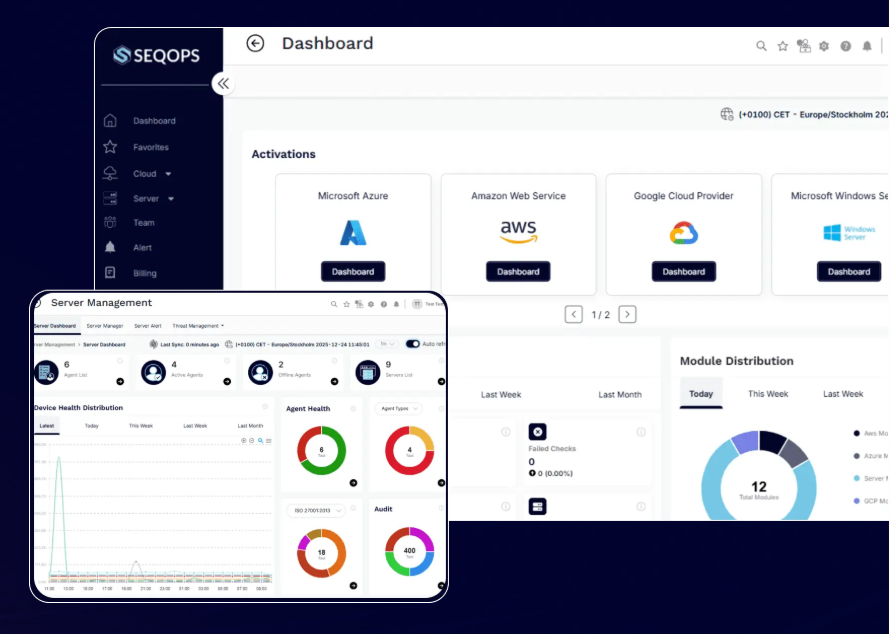
Platforms like SeqOps provide the autonomous vigilance required for modern security postures:
- Zero-Window Discovery: Real-time visibility into every asset on your network—from legacy servers to ephemeral cloud instances—eliminating “Shadow IT” blind spots.
- Risk-Based Prioritization: Moving beyond a generic list of thousands of bugs to pinpoint the “Critical 1%”—the vulnerabilities that sit on a live, exploitable attack path to your sensitive data.
- Agentless Side-Scanning: Gaining deep insights into your server health and configuration without the performance overhead or installation friction of traditional software agents.
3. The Synergy: Achieving “Shielded Efficiency”
The true breakthrough occurs when infrastructure management and security intelligence function as a single loop. This creates a Self-Healing Ecosystem where performance and protection are two sides of the same coin.
| Business Objective | Infrastructure Managed Role | Vulnerability Scanner Role |
| Rapid Scaling | Provisions new regions/resources instantly. | Automatically audits new assets for risk. |
| OpEx Reduction | Prunes “Zombie” servers and resources. | Identifies risky, abandoned cloud nodes. |
| Data Integrity | Enforces encryption and IAM policies. | Validates security controls in real-time. |
| Continuous Uptime | Ensures 99.99% availability via SRE. | Prevents downtime from unpatched exploits. |
Final Thoughts: Innovation Without Anxiety
By 2026, resilience is the only ROI that matters. By pairing the expert operational guidance required to build your future with the autonomous scanning tools required to protect it, your business can scale faster and more securely than ever before.