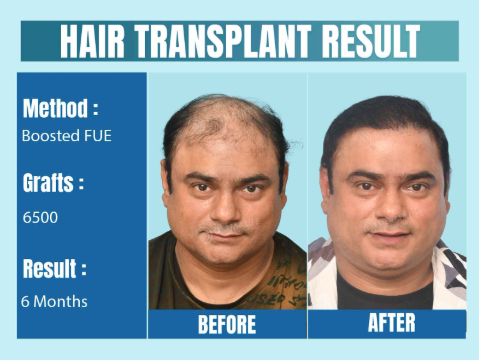
One of the main goals of modern hair transplantation is to create results that are not easily identifiable as surgical. An undetectable hairline is often considered the true benchmark of success. Advanced Follicular Unit Extraction (FUE) techniques have played a major role in achieving this goal by allowing precise control over graft selection, placement, and overall design.
Understanding how these advancements work helps patients appreciate why outcomes today differ significantly from earlier approaches.
What Makes a Hairline Detectable or Undetectable?
A detectable hairline usually results from uniform density, straight lines, or incorrect hair angles. These features draw attention because they do not mimic natural hair growth.
An undetectable hairline, on the other hand, blends seamlessly with existing hair. It has soft transitions, irregular borders, and natural direction. Advanced FUE techniques are designed to support these details.
Precision in Graft Extraction
Advanced FUE allows individual follicular units to be extracted with minimal trauma. Each graft is carefully selected based on hair count and thickness.
Single-hair grafts are especially important for the front-most portion of the hairline. Their use creates a soft, feathered appearance that mimics natural growth. Multi-hair grafts are reserved for areas behind the hairline where density is required.
This selective approach was difficult to achieve with older techniques.
Controlled Graft Placement
Advanced FUE hair transplant techniques emphasize precise control during graft implantation. The angle, depth, and direction of each graft are carefully planned.
Even slight deviations can affect how hair grows and reflects light. When grafts follow natural growth patterns, the hairline becomes visually indistinguishable from non-transplanted hair.
Clinics such as Dermalife Hair and Skin Clinic focus heavily on this level of precision, especially in cases where patients desire subtle, natural results.
Natural Density Gradients
A natural hairline is not densely packed at the very front. Advanced FUE supports the creation of gradual density transitions from the hairline backward.
This gradient effect is achieved by spacing grafts carefully and varying hair thickness across zones. Overly dense hairlines often look artificial, regardless of how well the grafts grow.
Reduced Trauma and Faster Healing
Minimally invasive extraction reduces trauma to both donor and recipient areas. Less trauma results in faster healing and lower risk of scarring.
This allows the hairline area to heal cleanly, without textural changes that might reveal signs of surgery. Faster healing also supports better graft survival.
Donor Area Management and Long-Term Planning
Advanced FUE enables better donor area management by distributing extractions evenly. This prevents visible thinning and preserves the donor region for potential future procedures.
Responsible donor management becomes especially important when discussing hair transplant cost in Delhi ncr, as long-term planning reduces the likelihood of corrective procedures later.
Role of Experience and Artistic Judgment
While technology plays a role, the success of advanced FUE still depends heavily on the surgeon’s experience and aesthetic sense. Tools alone cannot design a natural hairline.
Surgeons like Dr. Gaurav Garg emphasize that artistic judgment is essential when determining hairline shape, irregularity, and density. This approach focuses on facial harmony rather than aggressive correction.
Adaptability for Different Hair Types
Advanced FUE techniques can be adapted for various hair textures and skin types. Straight, wavy, and curly hair each behave differently when transplanted.
Adjusting graft spacing and angle based on hair characteristics helps maintain a natural appearance. This customization is a key reason why modern results appear more refined.
Patient Expectations and Realistic Outcomes
An undetectable hairline does not mean recreating a teenage hairline. It means designing a hairline that looks natural for the individual’s age and facial structure.
Understanding this distinction helps patients evaluate outcomes more realistically and appreciate subtle improvements.
Conclusion
Advanced Boosted FUE technique invented by well experienced hair transplant surgeons, Dr. Gaurav Garg. Boosted FUE techniques have significantly improved the ability to create undetectable hairlines. Through precise graft selection, controlled placement, natural density gradients, and careful donor management, modern hair transplantation achieves results that blend seamlessly with existing hair.
When combined with experienced planning and artistic judgment, these techniques help ensure outcomes that look natural today and continue to age well over time.