Creatine is one of the most popular and extensively researched supplements in the fitness industry. Millions of athletes, bodybuilders, and fitness enthusiasts use creatine to support strength, muscle growth, exercise performance, and recovery.
However, a quick search for creatine supplements reveals dozens of different forms, including creatine monohydrate, creatine HCL, buffered creatine, creatine nitrate, micronized creatine, and more. This variety often leaves consumers wondering:
Which type of creatine is best?
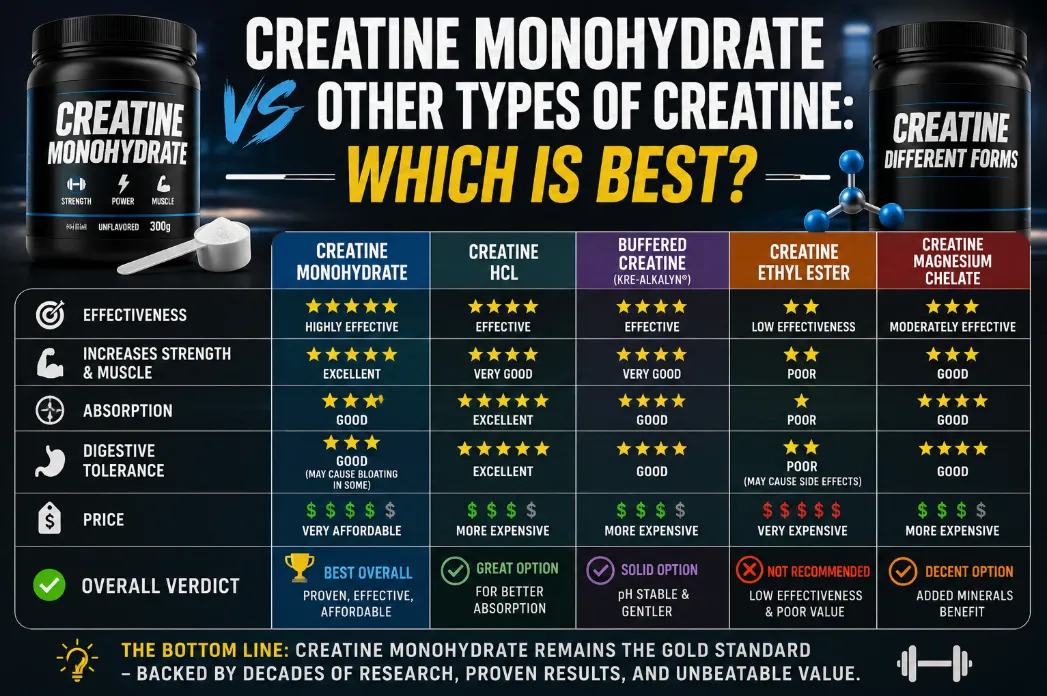
The short answer is that while many forms of creatine are available, creatine monohydrate remains the most studied, most proven, and most widely recommended option.
In this guide, we’ll compare creatine monohydrate with other popular types of creatine, examine their differences, and help you determine which form may be best for your fitness goals.
What Is Creatine?
Creatine is a naturally occurring compound found primarily in muscle tissue. It is made from three amino acids:
-
Arginine
-
Glycine
-
Methionine
The body produces creatine naturally, and it is also found in foods such as:
-
Beef
-
Pork
-
Salmon
-
Tuna
Once stored in muscles, creatine helps regenerate adenosine triphosphate (ATP), the body’s primary source of energy during short bursts of intense exercise.
This is why creatine is commonly used to support:
-
Strength
-
Power
-
Muscle growth
-
Athletic performance
-
High-intensity exercise
Why Are There Different Types of Creatine?
Supplement companies have developed multiple forms of creatine over the years in an attempt to improve:
-
Absorption
-
Solubility
-
Mixability
-
Digestive comfort
-
Convenience
While some forms offer unique characteristics, many claims regarding superiority over creatine monohydrate have not been consistently supported by scientific research.
Let’s examine the most common types of creatine available today.
1. Creatine Monohydrate
What Is Creatine Monohydrate?
Creatine monohydrate is the original and most researched form of creatine.
It consists of:
-
Creatine molecule
-
One water molecule
This simple structure has been studied extensively for decades.
Benefits of Creatine Monohydrate
Most Research Available
Hundreds of studies have examined creatine monohydrate’s effectiveness.
Research consistently supports its use for:
-
Strength gains
-
Power output
-
Muscle growth
-
Exercise performance
Cost-Effective
Creatine monohydrate is typically one of the most affordable forms available.
Highly Effective
For most people, creatine monohydrate delivers excellent results without requiring premium pricing.
Widely Available
Virtually every supplement retailer carries creatine monohydrate products.
Potential Drawbacks
Some users report:
-
Mild stomach discomfort
-
Temporary water retention
-
Mixability issues
However, these concerns are generally minor and can often be managed through proper dosing and hydration.
2. Micronized Creatine Monohydrate
Micronized creatine is simply creatine monohydrate that has been processed into smaller particles.
Benefits
-
Improved mixability
-
Easier suspension in liquids
-
Potentially smoother texture
Effectiveness
Because it is still creatine monohydrate, effectiveness remains essentially the same.
Many consumers choose micronized creatine for convenience rather than performance advantages.
3. Creatine Hydrochloride (Creatine HCL)
Creatine HCL combines creatine with hydrochloric acid.
Manufacturers often market it as:
-
More soluble
-
Easier to digest
-
Requiring smaller doses
Benefits
Better Solubility
Creatine HCL dissolves more easily in water than traditional monohydrate.
Smaller Serving Sizes
Many products recommend lower daily doses.
Research Comparison
While creatine HCL is popular, research supporting superior performance benefits compared to creatine monohydrate remains limited.
Most available evidence still favors monohydrate as the best-supported option.
4. Buffered Creatine (Kre-Alkalyn)
Buffered creatine is designed to maintain a higher pH level.
Manufacturers claim this may improve stability and reduce conversion to creatinine.
Benefits
Potential advantages include:
-
Reduced stomach discomfort
-
Alternative dosing options
Research Findings
Current research has not consistently demonstrated significant performance advantages over creatine monohydrate.
5. Creatine Nitrate
Creatine nitrate combines creatine with nitrate compounds.
It is commonly marketed toward athletes seeking:
-
Enhanced performance
-
Improved workout experiences
Potential Benefits
-
Increased solubility
-
Alternative formulation
Research Status
Research on creatine nitrate remains more limited than research on monohydrate.
Additional studies are needed to determine whether meaningful advantages exist.
6. Creatine Magnesium Chelate
This form binds creatine to magnesium.
Manufacturers suggest that magnesium may support energy production and muscle function.
Potential Benefits
-
Alternative delivery method
-
Additional magnesium intake
Research Comparison
Current evidence does not consistently show superior results compared to creatine monohydrate.
7. Creatine Ethyl Ester
Creatine ethyl ester was once heavily promoted as a next-generation creatine product.
Manufacturers claimed it would:
-
Absorb more efficiently
-
Reduce bloating
-
Improve performance
What Research Found
Several studies found that creatine ethyl ester does not outperform creatine monohydrate.
In some cases, monohydrate actually demonstrated better results.
As a result, creatine ethyl ester has become less popular over time.
Side-by-Side Comparison
|
Type |
Research Support |
Cost |
Solubility |
Overall Recommendation |
|
Creatine Monohydrate |
Excellent |
Low |
Good |
Best Overall |
|
Micronized Creatine |
Excellent |
Moderate |
Very Good |
Great Choice |
|
Creatine HCL |
Limited |
Higher |
Excellent |
Alternative Option |
|
Buffered Creatine |
Limited |
Higher |
Good |
Alternative Option |
|
Creatine Nitrate |
Limited |
Higher |
Very Good |
Emerging Option |
|
Magnesium Chelate |
Limited |
Higher |
Good |
Specialized Option |
|
Ethyl Ester |
Weak |
Higher |
Good |
Generally Not Recommended |
Which Type of Creatine Is Best?
For most consumers, the answer is straightforward:
Creatine Monohydrate Wins
Why?
Extensive Scientific Support
No other form of creatine has been studied as thoroughly.
Proven Results
Research consistently supports benefits related to:
-
Strength
-
Muscle growth
-
Athletic performance
-
Exercise capacity
Affordable Pricing
Creatine monohydrate typically offers the best value.
Reliable Effectiveness
Decades of research continue to support its use.
Who Might Consider Other Forms?
Alternative forms may appeal to individuals who:
-
Prefer improved mixability
-
Experience digestive discomfort
-
Want different supplement formats
For example, consumers who prefer convenient supplementation options may choose products such as QUOR.store creatine gummies for sale, which offer an easy alternative to traditional powders while still helping support daily creatine intake.
How Much Creatine Should You Take?
A common maintenance dose is:
3–5 grams per day
Some individuals choose a loading phase, while others simply take a consistent daily serving.
Consistency remains more important than timing.
Frequently Asked Questions
Is Creatine Monohydrate Better Than Creatine HCL?
Research currently supports creatine monohydrate as the better-studied and more proven option.
Does Creatine HCL Work?
Yes, creatine HCL can increase creatine intake, but evidence showing superior results over monohydrate is limited.
Which Creatine Is Best for Muscle Growth?
Creatine monohydrate remains the most supported option for muscle growth when combined with proper training and nutrition.
Is Micronized Creatine Better?
Micronized creatine offers better mixability but provides similar performance benefits to regular creatine monohydrate.
What Is the Most Recommended Creatine?
Most sports nutrition experts continue to recommend creatine monohydrate due to its safety profile, affordability, and extensive research support.
Final Thoughts
With so many creatine products on the market, it’s easy to assume that newer forms must be better. However, decades of scientific research continue to support creatine monohydrate as the gold standard.
While alternative forms such as creatine HCL, buffered creatine, and creatine nitrate offer unique features, none have consistently demonstrated superior performance benefits compared to monohydrate. For most athletes, fitness enthusiasts, and beginners, creatine monohydrate provides the best combination of effectiveness, safety, affordability, and scientific validation.
If your goal is to build strength, support muscle growth, and improve workout performance, creatine monohydrate remains the benchmark against which all other forms are measured.